Products
Electronic Wires Division
UL- and CSA-recognised insulated electronic wires built for denser wiring spaces as equipment shrinks and performance rises.
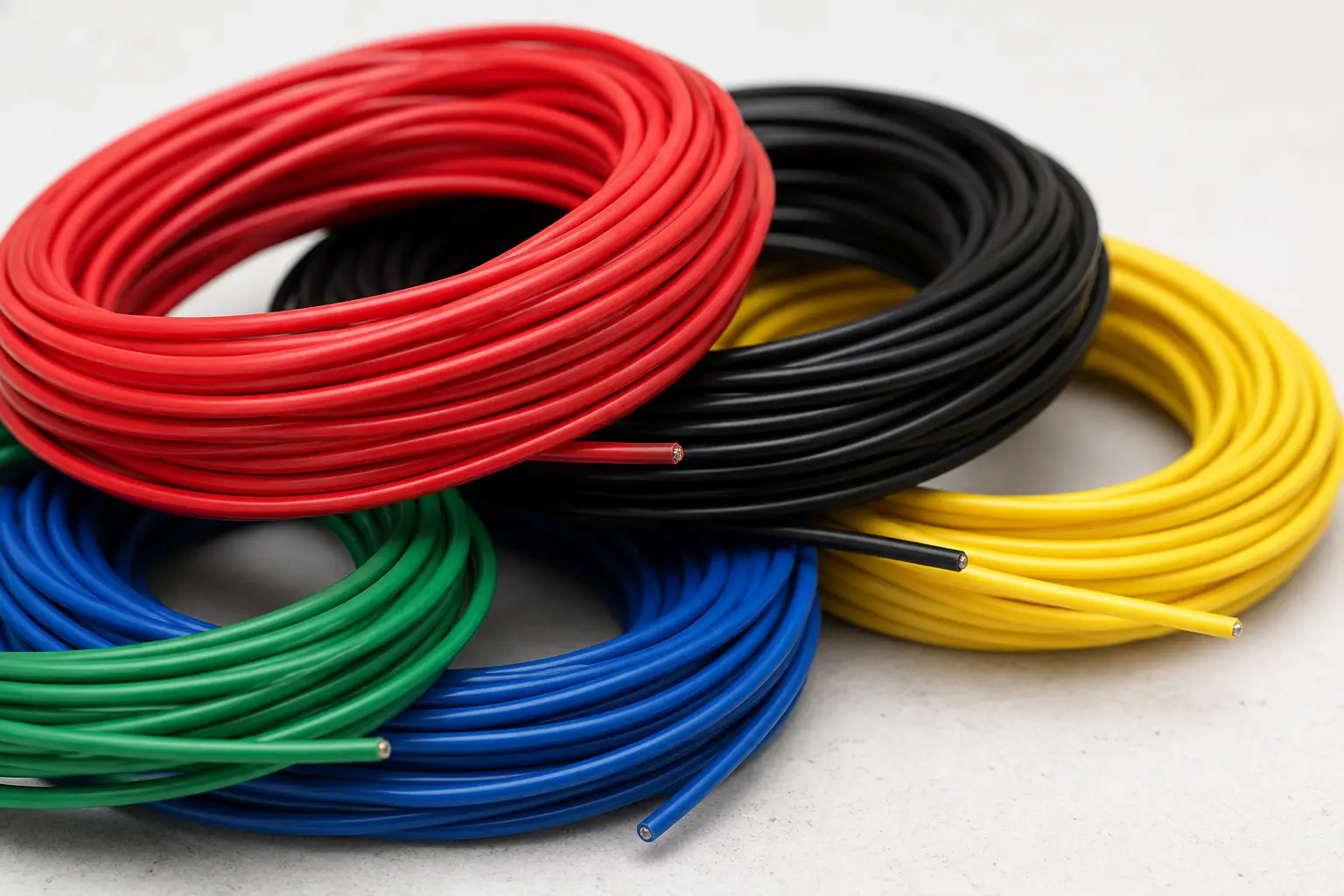
SEPM’s Electronic Wires Division produces a wide range of wires and cables intended to simplify wiring while improving operational efficiency. As computers, switchboards, and other electrical or electronic devices grow smaller and more capable, lighter, smaller wires with a better space factor become essential — that is the problem statement the division’s public materials emphasise.
Product lines described on the archived site are also presented as Underwriters Laboratories (UL) and Canadian Standards Association (CSA) recognised. Style numbers (for example AWM 1007, 1015, 1061, and many irradiated styles) appear as a practical language for buying agents and compliance teams aligning drawings to approvals.
Major categories
- Wires for piercing connectors — lead-free constructions aimed at fine 1.5 mm pitch piercing connector systems, with temperature/voltage ratings such as 80°C / 150 V and 105°C / 300 V called out historically.
- Lead-free heat-resistant PVC wire — a deep UL style ladder covering common hook-up wire ratings (including styles aligned to TR-64, TEW, and higher-temperature AWM numbers).
- SUMIFLEX™ — super-flexible PVC insulated wire/cable families (including higher-voltage flexible constructions) marketed as newer flexible options.
- IRRAX™ irradiated wires — cross-linked constructions spanning V2, HF, B, spiral shielded, and high-voltage variants (see the dedicated IRRAX™ page).
How UL / CSA style tables are used
Archived tables list category, UL style number, CSA type, product name, and rating. Treat those rows as a map of what SEPM has historically offered — not as a live stock list. Matching a style number is only the first step; conductor size (AWG), colour code, insulation thickness, and flame ratings must all match the OEM drawing and end-equipment standard.
From electronics to automotive adjacency
Although this division’s brochure language leans toward electronic equipment wiring, SEPM’s plant milestones show parallel growth in automotive wire, high-voltage wire, and HEV constructions in M4 and related expansions. That adjacency matters for suppliers evaluating a Malaysian campus that already understands both consumer/industrial electronics densities and vehicle-oriented cable discipline.
Practical next steps for specification engineers
Start by mapping your connector pitch and temperature class, then decide whether thermoplastic PVC, highly flexible PVC (SUMIFLEX™), or irradiated IRRAX™ chemistry better fits flex life and thermal aging. For EMI, review spiral shielded constructions. For elevated DC or AC voltages inside compact chassis, jump to the high-voltage wire families — including halogen-free options where substance restrictions apply.
Compare with Flat Component Division offerings when your interconnect is better served by laminated FFC than discrete insulated wire.